The answer most clinic directors are working with is: hire more people. It is the obvious move. Patient volume is up, chronic disease referrals are rising, and the waiting list pressure from the NHS is redirecting patients into private care faster than most services anticipated. The UK NHS waiting list stood at 7.4 million patients in early 2025, and private providers are absorbing a growing share of that demand — particularly in chronic conditions like diabetes, obesity, and cardiovascular disease.
So clinics hire. And then they discover the problem is not the headcount. It is the math.
The unit economics of chronic care do not scale linearly
Chronic disease management is not episodic. A patient with prediabetes or Type 2 diabetes does not need one appointment. They need sustained, longitudinal support, regular check-ins, behaviour change coaching, progress monitoring, and clinical oversight over months or years. A skilled diabetes specialist nurse in the UK earns between £41,000 and £50,000 per year. They can actively manage a finite caseload. Double the patients: you double the headcount, you double the payroll, and you still have not solved the real problem; which is keeping patients engaged between appointments.
The numbers compound quickly. The UK private healthcare sector experienced cost inflation of 20 to 24% between 2022 and 2024, with clinical wage growth as the primary driver. And demand is not plateauing. The number of people in England living with major long-term illness is projected to rise 37% by 2040. Hiring your way through that curve is not a strategy. It is a cost spiral.
The engagement problem that hiring does not solve
Here is what makes chronic care structurally different from acute care: the outcome depends almost entirely on what happens between clinical touchpoints. Medication adherence, dietary change, physical activity, stress management, these are not things that happen in a consultation room. They happen in a patient's daily life, in moments when a clinician is not present.
This is where most scaling attempts break down. Digital tools that try to replace the human element see dropout rates above 60% within the first few months. The technology delivers information; it does not change behaviour. But hiring more clinicians to fill that gap is equally unsustainable. It is high-cost capacity applied to a problem that requires a different architecture, not more of the same.
What actually scales: restructuring the clinical model
The clinics and programmes demonstrating genuine scale are not choosing between staff and technology. They are separating the functions.
Technology handles the longitudinal layer: continuous data capture, habit tracking, programme delivery, alerts, and patient-reported outcomes. Human coaching handles the pivotal layer: the conversations that determine whether a patient stays engaged, changes a behaviour, or drops out. When these two functions are clearly separated, each becomes dramatically more efficient. A qualified health coach or dietician focused exclusively on behaviour change can support a much larger caseload when they are not also managing the administrative, monitoring, and documentation burden.
This model does not reduce the importance of clinical expertise. It concentrates it where it has the highest impact.
How Liva approaches this
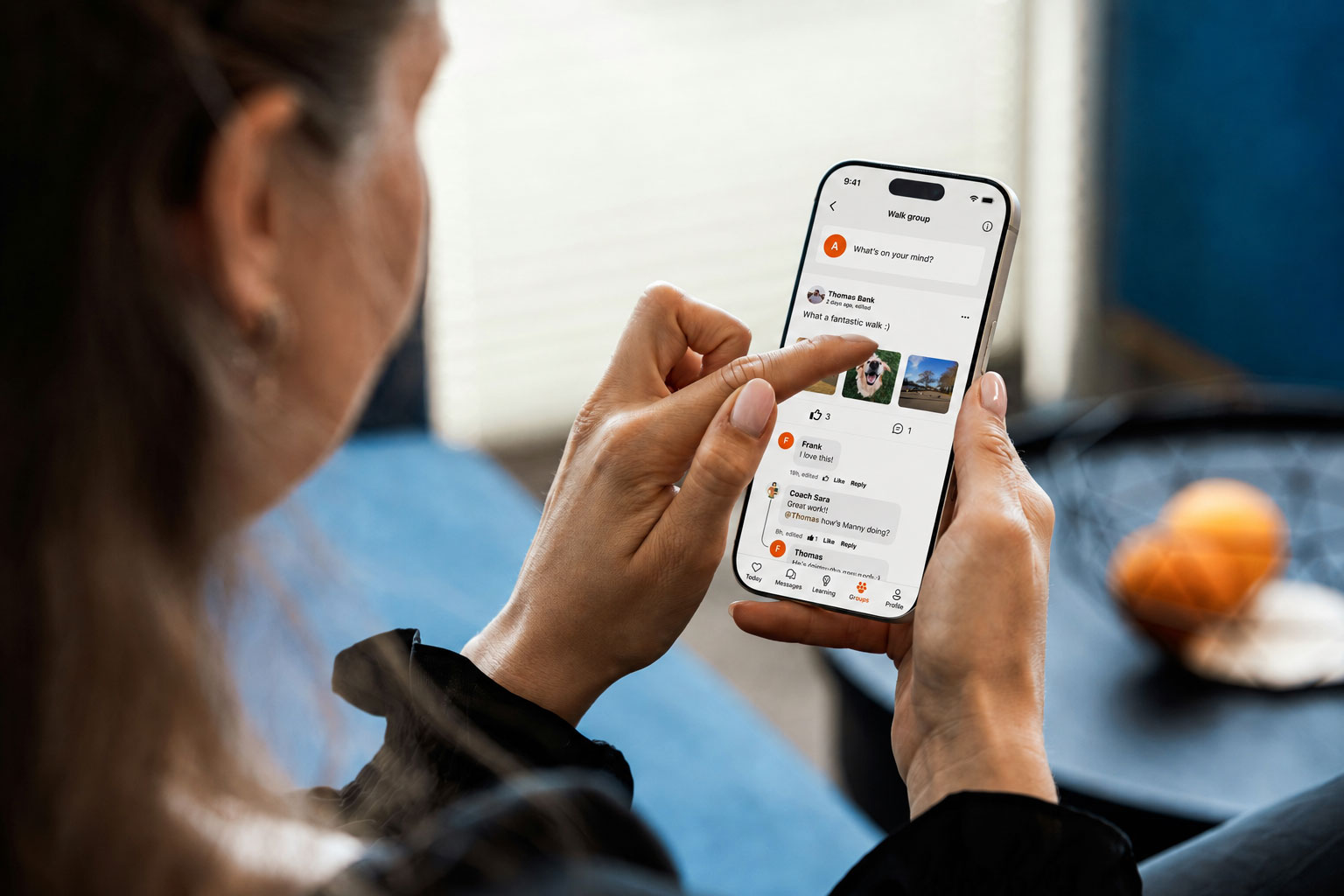
Liva's products are built around this separation. Liva Engage delivers the digital infrastructure: programme content, tracking, and health data. Liva Care and Liva Life layer in qualified coaches and dieticians who focus exclusively on the clinical conversations that drive lasting change. The result is a model where patient volume can grow without a proportional increase in clinical headcount — because each clinician's time is deployed at the point of maximum leverage, not spread across tasks that technology can handle better.
It is not a substitution. It is an architecture.
If you are building or scaling a chronic disease programme and want to understand what this looks like in practice, talk to our team.