
A search for the best digital health apps produces lists containing step counters, meditation tools, remote monitoring services and chronic disease programmes. These products may all use an app, although they address different needs and require different forms of evidence.
An individual may choose an app because it is easy to use and suited to a personal goal. An insurer, healthcare provider or employer must assess a wider service. The buyer needs to know which population the intervention was designed for, how support will be delivered and what results can be measured.
The app is one component of this service. Programme design determines what users receive after they enrol. Professional workflows determine when someone receives support. Clinical governance establishes who responds when a health concern appears. Reporting allows the buyer to compare the commissioned service with its agreed objectives.
A useful evaluation therefore begins with this question:
"What combination of technology, care and ongoing support gives the intended population a realistic route to the agreed outcome?
What are the best digital health apps?
There is no single best digital health app for all users and health goals. A medication management app, an employee wellbeing tool and a Type 2 diabetes programme address different problems. A fair comparison must begin with the intended user and the outcome the service claims to support.
Digital health apps can be used for:
- General wellbeing, including sleep, movement or nutrition
- Prevention for people with an identified health risk
- Long-term behaviour change and weight management
- Support for people living with a chronic condition
- Medication adherence and treatment support
- Symptom tracking or remote monitoring
- Communication between patients and healthcare professionals
The evidence threshold should match the function of the product. An app that provides general educational content does not require the same evaluation as software that influences treatment decisions or monitors clinical risk.
The NICE Evidence Standards Framework helps organisations assess evidence for digital health technologies. It groups technologies by their function and connects those groups to expected evidence levels. A buyer can use this framework to test whether the evidence supports the product’s stated purpose.
Assurance requires a separate assessment. The NHS Digital Technology Assessment Criteria cover clinical safety, data protection, technical security, interoperability, usability and accessibility.
DTAC is an assessment framework rather than an external certification. A completed assessment does not prove that an intervention improves health outcomes. It shows whether defined baseline requirements have been reviewed for a stated product and use case. Buyers should inspect the scope, date and reviewing organisation instead of relying on a general claim of “DTAC compliance.”
Before selecting an app, ask:
- Which population and need was the product designed for?
- What change is the intervention expected to support?
- Does the evidence apply to the proposed population?
- What professional support is included?
- Who owns clinical governance and escalation?
- How are privacy, security and accessibility managed?
- Which participation and outcome measures will be reported?
- Can the product exchange the required information with existing systems?
- What work remains with the commissioning organisation?
Feature count gives an incomplete comparison. A product may offer dashboards, automated messages and device connections while leaving the buyer responsible for programme design, staffing or escalation.
The best digital health apps perform a defined role within an agreed service model. Buyers should assess the intervention around the app and the outputs included in the contract.
What is a digital health program?
A digital health program is a structured health intervention delivered wholly or partly through digital technology. It may use an app, connected device, web platform, secure messaging or video consultations.
The programme defines the population, pathway and support model. It also establishes what happens when progress stalls or a participant needs a different level of care.
The World Health Organization’s classification of digital interventions covers client communication, personal health tracking, decision support and health-system functions. This classification shows why “digital health” cannot be treated as a single product category.
A digital health programme should define:
- Its intended population and eligibility criteria
- The intervention participants will receive
- The professionals responsible for delivery
- The duration and expected level of participation
- The measures used to assess progress
- Clinical governance and escalation responsibilities
- Reporting requirements for the commissioner
These elements separate programme delivery from software access.
The Healthier You NHS Diabetes Prevention Programme offers one example. It provides a defined lifestyle-change pathway for people at risk of developing Type 2 diabetes. Participants may access the programme through face-to-face or digital delivery.
The digital route can include an app, wearable technology, health coaching, peer support and electronic goal tracking. The service has defined eligibility requirements and a set delivery period. These components work together as part of the intervention.
This distinction affects procurement. Buying a software licence gives an organisation access to technology. Commissioning a digital health programme includes the delivery structure around that technology, subject to the contracted model.
A programme contract should state:
- Who recruits and enrols participants
- Who delivers professional support
- Who monitors progress and risk
- Which party manages clinical escalation
- How long support continues
- Which measures are reported
- How the service handles disengagement
The answers reveal the operational work included in the service. They also help the buyer compare a technology-only model with a managed programme.
Programme evaluation should follow the full route from eligibility to the claimed outcome. Referral measures potential reach. Enrolment measures uptake. Continued participation shows whether people received the intervention. Clinical outcomes assess changes in health. Utilisation or claims data are required when a supplier makes a financial claim.
These measures cannot replace one another. High app activity does not establish a clinical result. A clinical result does not establish lower claims costs unless claims or healthcare utilisation were measured directly.
Which is the best example of digital wellness?
The best example of digital wellness is a service designed around a stated wellbeing goal and user group.
A programme for a generally healthy employee population may focus on physical activity, sleep or nutrition. Participation, changes in behaviour and validated wellbeing measures may be suitable outputs.
A population with identified clinical needs may require a structured healthcare intervention. The service may need qualified professional support, monitoring and a documented escalation route. A general wellness app should describe its limits clearly when it does not provide these functions.
Buyers should examine digital wellness and digital healthcare as related categories with different responsibilities. The intended use determines the evidence and governance required.
The NHS Digital Weight Management Programme illustrates how a digital service can report several stages of programme performance. NHS England publishes referral, enrolment, completion and outcome information for the programme.
Each measure answers a separate question:
- Referrals indicate how many eligible people entered the pathway.
- Enrolment shows how many began the service.
- Completion records how many received the planned programme.
- Outcome reporting assesses change among the measured population.
A report focused on registrations would leave the buyer unable to assess delivery after sign-up.
Insurers and employers should apply the same distinction when reviewing a health insurer wellness programme. When the objective is general wellbeing, behavioural and experience measures may be suitable. A programme that claims to manage clinical risk requires evidence related to that claim.
A forecast of lower healthcare costs needs another evidence layer. The provider should explain how the expected outcome connects to healthcare utilisation in the covered population. Directly observed claims data should be separated from financial modelling.
The buyer should also consider access. A digital service can expand reach, although access to a smartphone does not guarantee that every member can use the programme in the same way. Language, disability, digital confidence and the availability of human support can affect participation.
Useful reporting should therefore show:
- How many eligible people were invited
- Which groups enrolled
- How participation changed over time
- Where participants left the programme
- Whether outcomes differed across population groups
- Which results were observed and which were modelled
A digital wellness service has a clearer purpose when it sits within a planned member journey. Lower-risk users may receive self-guided support. People with greater needs may enter a coached or clinically governed pathway. The service design should state how that decision is made.
What is the best healthcare software?
The best healthcare software enables the service model an organisation needs and gives staff information they can act on.
The patient app may be the most visible part of the product. Delivery also depends on the tools used by healthcare professionals and programme teams.
Software for prevention or chronic condition management may support:
- Patient onboarding and eligibility checks
- Care plans and goal setting
- Secure patient-professional communication
- Coaching or clinical workflows
- Remote monitoring and connected devices
- Risk identification and escalation
- Pathway automation
- Population and programme reporting
- Integration with existing health systems
The required functions depend on the service.
A healthcare provider with its own delivery team may need configurable technology and implementation support. Another organisation may need the supplier to provide the platform and run the programme. The commercial proposal should make this division clear.
Start the software assessment with operational questions:
- Who reviews each participant’s progress?
- Who responds to a risk flag?
- What information does each professional need?
- Which systems must exchange data?
- How will people with different access needs use the service?
- Which patient and programme outputs will be reported?
- Which administrative tasks remain with the buyer?
Software can reduce repetitive work when the workflow is defined. An unclear pathway produces unclear system requirements. If no one owns a missed check-in or risk alert, more notifications may increase workload without improving the response.
The WHO guidance on digital interventions for health-system strengthening states that digital interventions depend on the wider health system in which they operate. Buyers should therefore assess responsibilities and response processes alongside the technology.
Good healthcare software should produce usable outputs for each group involved:
- Patients can see their goals and communicate through an agreed channel.
- Professionals can identify who needs attention and review relevant progress.
- Programme managers can monitor delivery against contracted measures.
- Commissioners can distinguish reach, participation and outcomes.
Those outputs give the buyer a better basis for comparison than a feature demonstration alone.
What evidence supports Liva’s model?
Liva Healthcare provides a digital platform for lifestyle-change programmes and professional coaching. Depending on the commissioned service, organisations can use the technology with their own teams or include programme delivery.
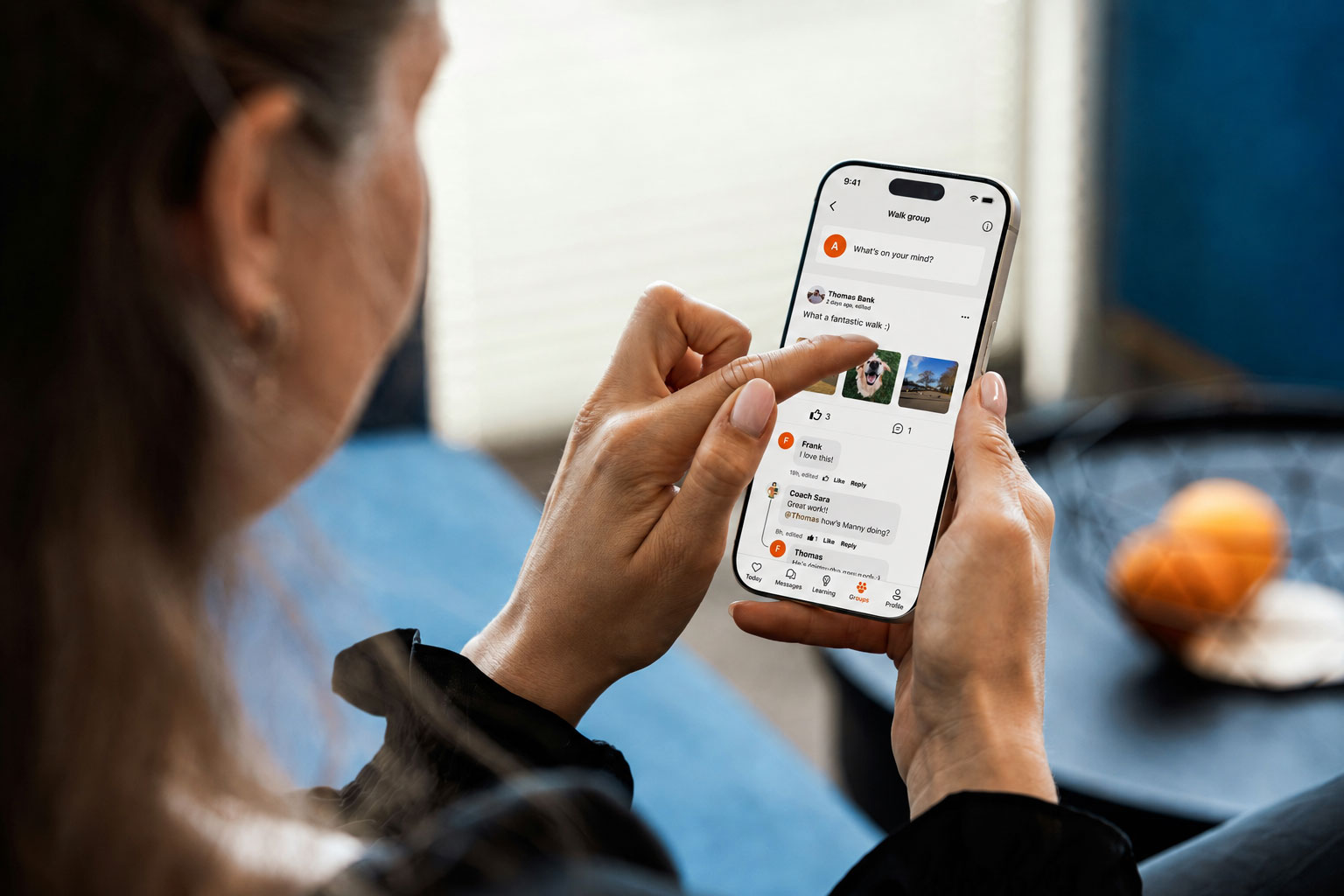
Patients use the service to set goals, communicate with a health professional and record progress between scheduled contacts. Delivery teams can review participant activity and manage follow-up through professional workflows. Commissioners can agree programme measures and receive reporting on delivery.
These descriptions explain how the service operates. Evidence and assurance answer different procurement questions.
NICE Early Value Assessment
In 2023, NICE included Liva among seven digital technologies that could be used in the NHS while further evidence was generated for multidisciplinary weight-management services.
The NICE Early Value Assessment concerns a defined NHS use case. It includes technologies used to deliver weight-management services and support the prescribing or monitoring of weight-management medicine.
The guidance should not be presented as approval of every Liva programme. It does not establish claims savings. It shows that Liva was assessed within the stated NHS pathway and was included in NICE’s recommendation for use during further evidence generation.
A buyer should check whether the commissioned programme matches the population and service covered by the guidance.
Peer-reviewed clinical research
A 12-month randomised controlled trial published in the Journal of Medical Internet Research assessed individualised digital lifestyle coaching delivered through the Liva platform.
The study reported greater average weight loss in the digital coaching group than in the usual-care group at 12 months. The published averages were 4.5 kg and 1.5 kg respectively. Read the peer-reviewed RCT.
These are topline, aggregated research results. They contain no identifiable participant information.
The study also has limits that buyers should consider. Participant attrition was material, and the study did not find a significant between-group difference across several secondary clinical measures. The findings support a weight-loss claim for the studied intervention and population. They do not prove lower healthcare utilisation or insurance claims.
Evidence from this study should not be applied automatically to every Liva programme. A buyer assessing a service for another condition or population should request evidence relevant to that commissioned pathway.
Information security and data protection
Liva states that its information security management follows ISO/IEC 27001:2022 and that its data processing complies with GDPR requirements. See Liva’s data protection and compliance information.
These controls address information security and data protection. They do not prove clinical effectiveness.
Before recording ISO certification in a procurement assessment, the buyer should request the current certificate and inspect:
- The certified organisation
- The certification scope
- The issuing body
- The effective and expiry dates
- Any exclusions relevant to the commissioned service
The buyer should also review the data-processing agreement and roles of each party. A data protection impact assessment may be required for the planned implementation.
What commissioners should request from Liva
The available sources answer separate questions:
- NICE addresses a defined NHS weight-management use case.
- The RCT provides comparative evidence for one studied intervention.
- ISO 27001 and GDPR information concerns security and data protection.
A commissioner still needs programme-specific information. The procurement process should establish:
- Which Liva intervention will be delivered
- Which population is eligible
- Who provides professional support
- Who owns clinical governance
- Which outcomes will be measured
- How disengagement will be managed
- What the commissioner will receive in its reports
- Which results are observed and which are modelled
This approach applies the article’s evaluation standard to Liva itself. The buyer receives a clearer account of the service, the supporting evidence and the limits of each source.
How should organisations choose between digital health apps?
Begin with the population, intervention and expected outcome. Map the proposed pathway before reviewing the product demonstration.
The evidence review should examine the study population, comparator, follow-up period and attrition. It should also state whether the analysis covers all enrolled participants or only people who completed the programme.
Assurance documents require their own review. Check the scope, date and responsible assessor. DTAC, ISO certification and GDPR compliance address different requirements. None establishes clinical effectiveness on its own.
Implementation planning should define data exchange, professional responsibilities and escalation routes. Reporting requirements should separate reach, participation, clinical outcomes and healthcare impact.
The best digital health app is the product that performs a defined role within a suitable programme and provides evidence related to the outcome being claimed.
For organisations considering Liva, the next step is to specify the population and commissioned pathway before comparing delivery models. Contact Liva Healthcare to discuss the programme, professional support, evidence and reporting required for that use case.